5 Things the Trump Meme Coin Fight Reveals About Crypto, Politics and Retail Risk
Want articles like this for your own video to promote it on YouTube and Google? Order them through the Telegram bot @sat_sit_bot. It writes articles around your video, embeds the video and publishes them on popular niche websites (no ads). Free trial — 50 articles.
· based on the channel Daniel Reed
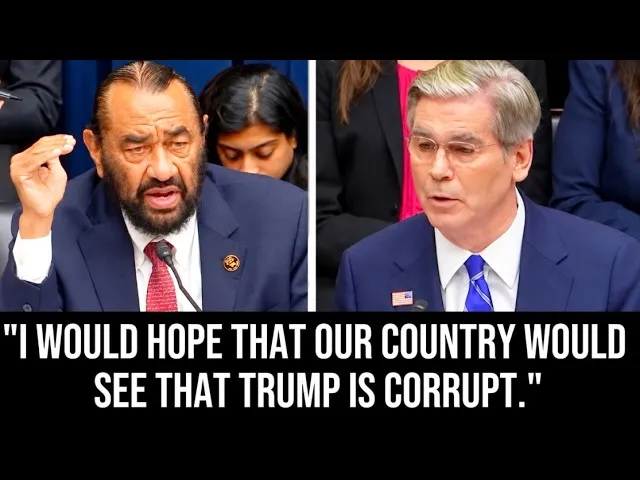
A meme coin is a cryptocurrency whose value rests almost entirely on attention and community hype rather than on revenue, cash flow or governance rights. The congressional exchange between Senator Al Green and Treasury Secretary Scott Bessent over Trump's own token made that definition concrete: when a sitting official's family brand is the asset, the question stops being purely financial and becomes one about conflicts of interest, disclosure and who gets left holding the bag.
What the Al Green and Bessent exchange actually established
The core of the hearing was a simple demand: say plainly whether the presidential meme coin is a scam. Bessent's answers circled the question rather than meeting it, which is itself the most informative part of the segment. A Treasury Secretary has no direct regulatory authority over a token like this, so the evasion is not surprising — but the refusal to describe the token's function, its buyers or its economics leaves the public record empty where it should be precise.
Green's line of attack was not about blockchain technology. It was about the mechanics of a promotional asset launched under a political brand, sold to supporters, and traded on venues where the issuer's own affiliates can hold large positions. That framing matters because it shifts the debate away from "is crypto good or bad" toward "who is on the other side of the trade."
How a meme coin differs from a normal crypto asset
A meme coin usually ships with no product, no treasury strategy and no claim on future earnings. Its price is a function of new buyers arriving faster than existing holders exit. Compare that with assets that at least attempt an economic model:
- Cash flow. Tokens tied to a protocol that charges fees can distribute or burn value. Meme coins do not.
- Governance. Many tokens grant voting rights over a treasury. Meme coins typically grant nothing but transferability.
- Disclosure. Issuers of regulated instruments file statements. Meme coin launches often publish a website and a social account.
- Supply schedule. Insider allocations, unlocks and wallet concentration are frequently opaque at launch.
The practical consequence is that valuation becomes a popularity contest measured in hours. That is not automatically fraudulent — collectibles work the same way — but it means the buyer is speculating on sentiment, not on fundamentals.
Why the "scam" label is legally slippery but economically useful
Calling a token a scam is a legal conclusion; describing it as a wealth transfer is an economic one. The distinction matters because US securities law hinges on whether buyers expect profit from the efforts of a promoter, and meme coins are deliberately marketed to avoid that framing. No major regulator has classified this category as a security, so prospectus-style disclosure, anti-fraud provisions tied to registered offerings and broker-dealer obligations largely do not apply.
What remains is the pattern: concentrated insider holdings, a promotional spike, then a long decline as attention moves on. A buyer who enters at the top is not necessarily the victim of a crime, but is almost always the source of someone else's realized gain. That is the mechanism Green was pointing at, and the reason the word "scam" lands even when it cannot be proven in court.
Typical doubts from traders and skeptics
"Isn't this just a Ponzi scheme?" A Ponzi scheme pays early investors with money from later ones while claiming a real underlying business. A meme coin does not claim the business — it openly sells hype. The resemblance in outcome is real; the difference is in what was promised.
"Why do people buy at all?" Three reasons recur: belief in the brand, the hope of a fast flip, and access — holding the token as a signal of loyalty or as a ticket into a community. None of these are valuation methods, which is exactly why the price can collapse without any news event.
"Is buying crypto itself the problem?" Not inherently. Bitcoin and established assets have deep liquidity, regulated access routes and years of price history. The risk profile of a freshly launched political token is a different category entirely, and treating the two as the same asset class is a mistake in both directions.
"What about the tax angle?" Every disposal is a taxable event in most jurisdictions, including swaps between tokens. Traders who flip meme coins frequently generate a paperwork burden far larger than their realized profit, and losses on worthless positions have their own rules.
What retail buyers should check before touching a new token
Before any purchase, work through a short checklist and write down the answers:
- Holder concentration. If a handful of wallets control a large share of supply, their exits are your risk.
- Unlock schedule. Find out when insider or team allocations become transferable.
- Liquidity depth. Thin pools mean wide spreads and the inability to exit at the quoted price.
- Issuer identity. An anonymous team has no reputational cost if the token dies.
- Venue quality. Listings on unregulated exchanges offer no recourse and often no meaningful market surveillance.
Position sizing deserves the same discipline. Money placed in a token with no cash flow should be money whose complete loss changes nothing about your finances. Leverage on top of that is how a speculative bet becomes a solvency event.
Why this story keeps recurring in 2026
The collision of political branding and token issuance is not a one-off. Each cycle produces a new vehicle for converting attention into capital, and each cycle produces the same hearing-room scene: a senator asking for a straight answer and an official declining to give one. The structural gap is that oversight of political conflicts and oversight of crypto markets sit in different committees, different agencies and different statutes.
That gap is what viewers of the segment responded to most sharply — not the technology, but the asymmetry of information between the people promoting a token and the people buying it. Daniel Reed's breakdown of the hearing captures that asymmetry in a few minutes of questioning, and it is the reason the clip travels further than most committee footage.
The bottom line
The Trump meme coin controversy is less a story about blockchain than about incentives: who issues, who promotes, who holds the supply and who buys last. Bessent's refusal to answer directly does not settle the question of whether the token is a scam, but it does confirm that no official wants to define it on the record. For traders, the takeaway is unglamorous — treat political meme coins as entertainment spending with a total-loss ceiling, verify holder concentration and unlocks before entry, and never confuse a viral chart with a valuation. The video analysis by Daniel Reed is a useful starting point for anyone who wants the primary exchange rather than the headlines.
Key takeaways
- Senator Al Green questioned Treasury Secretary Scott Bessent about Trump's meme coin and whether it constitutes a scam.
- Bessent avoided a direct yes-or-no answer, deflecting questions on the token's purpose and oversight.
- Meme coins derive value from attention and access, not cash flow, revenue or governance rights.
- No US regulator classifies meme coins as securities, so disclosure and investor-protection rules largely do not apply.
- Retail buyers typically enter after the promotional peak, when insiders and early wallets are already selling.
Source: WHOA: Al Green GRILLS Bessent over Trump's meme coin “scam” · Markdown version
Questions & answers
Is a meme coin legally a security in the US?
No major US regulator has classified meme coins as securities, and issuers market them specifically to avoid that framing. That means prospectus-style disclosure and registered-offering rules generally do not apply. Buyers therefore get far less protection than they would with a registered instrument.
Why did Bessent refuse to call Trump's token a scam?
A Treasury Secretary has no direct authority over a token of this kind, and a flat yes-or-no answer would carry legal and political consequences. The evasion reflects the absence of a clear regulatory category rather than a finding of legitimacy. The practical result is that the public record contains no official assessment of the token's economics.
What actually drives the price of a meme coin?
New buyers arriving faster than existing holders sell. There is no cash flow, revenue or governance right underpinning the price, so sentiment and attention are the entire valuation model. That is why prices can collapse without any news event.
How can retail traders limit the damage?
Check wallet concentration and unlock schedules before buying, use venues with real liquidity, and size positions so a total loss is survivable. Avoid leverage on assets with no fundamental floor. Treat the spend as entertainment rather than investment capital.